In today’s digital ecosystem, most businesses treat their growth like a collection of separate engines. Marketing is one engine, sales is another, and customer success is a third. They all run on different fuel, at different speeds, and often in slightly different directions. But what happens when the connection between these engines starts to fray? Revenue begins to leak through the cracks.
You might notice the symptoms before you find the cause. Your traffic is up, yet your pipeline is stagnant. Your sales team complains about lead quality while marketing insists they are hitting their targets. This friction is the primary signal that your funnel isn't just inefficient: it’s leaking.
At VonClaro, we are moving beyond the traditional role of a digital marketing agency to become a dedicated Revenue Operator. We believe in the power of a Single Revenue System: a unified, data-driven framework where every department operates toward the same bottom-line goal. In this guide, we will explore how to conduct a comprehensive system audit to identify and plug those leaks once and for all.
Beyond the Technical: Why Most Audits Fail
When business owners look for a website audit template free online, they are usually met with a checklist of technical SEO fixes. They find instructions on how to fix 404 errors, optimize meta descriptions, or improve page load speeds. While these are essential for visibility, they rarely address the fundamental question: Why isn't this traffic turning into money?
A Revenue Operator looks at the audit process through a different lens. We aren't just looking for broken links; we are looking for broken processes. A technical audit might tell you that your "Contact Us" page loads in 1.2 seconds, but a revenue audit will tell you that 60% of the leads who fill out that form never receive a follow-up within the first 24 hours.
By shifting your focus from "website performance" to "revenue performance," you begin to see the funnel as a continuous journey rather than a series of isolated events.
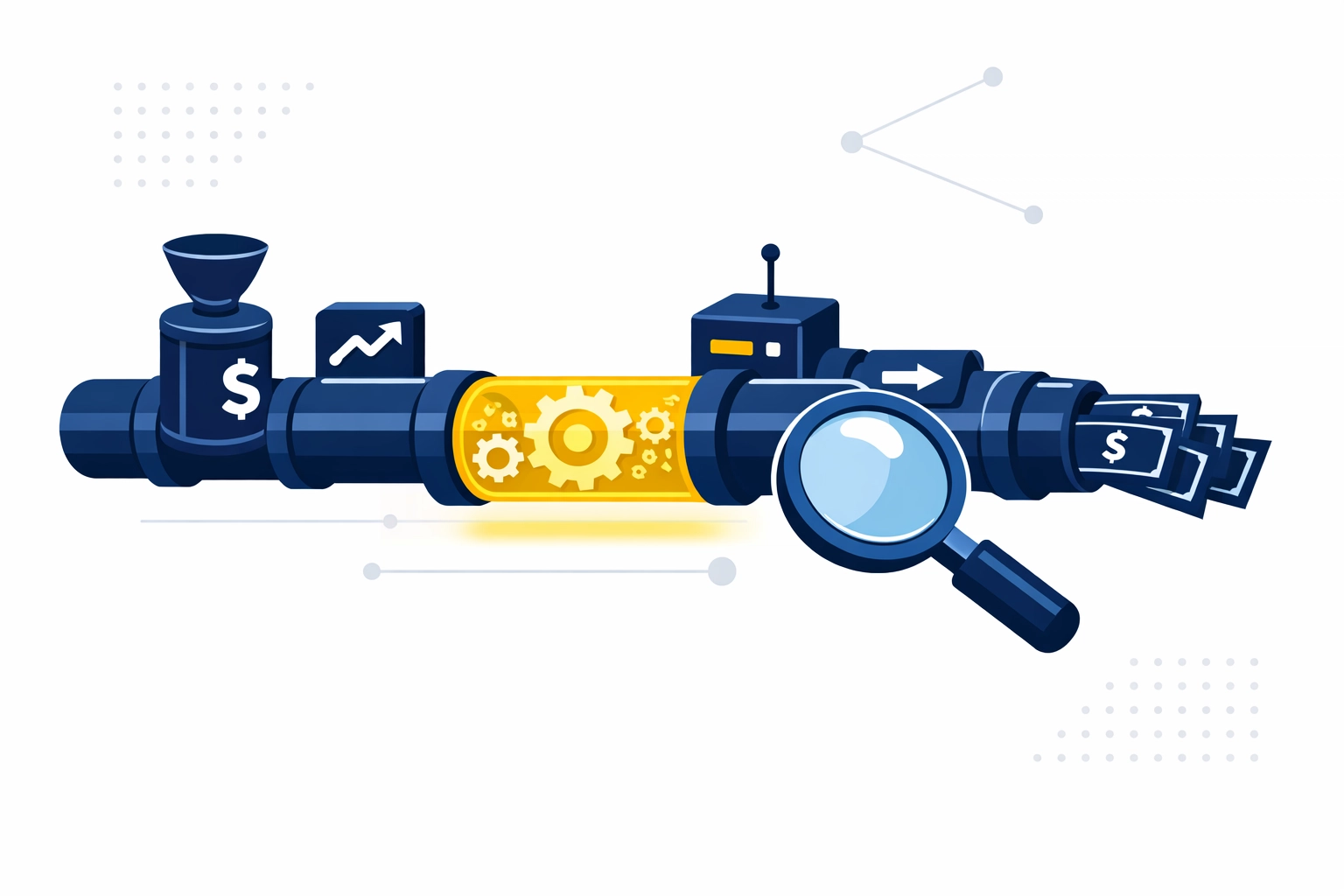
The Marketing-Sales Chasm: Where Revenue Goes to Die
The most significant leaks in any B2B or high-consideration B2C funnel occur at the "handoff." This is the critical moment when a prospect transitions from a Marketing Qualified Lead (MQL) to a Sales Qualified Lead (SQL).
In many organizations, this handoff is a black hole. Marketing "tosses" leads over a wall, and Sales chooses which ones to catch. To identify leaks in this area, you must analyze your lead disposition data. Ask yourself:
- What percentage of marketing-generated leads are actually contacted by sales?
- What is the average "speed to lead"?
- Is there a shared definition of what a "qualified" lead actually looks like?
If your marketing team is celebrating record-high lead volume while your sales team is struggling to hit quota, you don't have a lead problem: you have a system leak. By employing a unified revenue strategy, you can align these departments so they speak the same language and share the same incentives.
The Revenue Operator’s Audit Framework
To conduct a true system audit, you must move systematically through each layer of your business. It is not enough to glance at your Google Analytics; you must dive into the underlying mechanics of your growth engine.
1. The Data Integrity Audit
Before you can trust your funnel metrics, you must trust your data. A Single Revenue System requires a "Single Source of Truth." This means your CRM, your marketing automation platform, and your website tracking must be perfectly synced.
Common leaks in data include:
- Duplicate Records: Creating a fragmented view of the customer journey.
- Broken Conversion Tracking: Misattributing revenue to the wrong channels.
- Siloed Reporting: Marketing reporting on "clicks" while Sales reports on "contracts" without any bridge between the two.
2. The Conversion Path Audit
Once the data is clean, you must walk the path of the customer. Start from your search engine marketing ads or organic search results and move all the way to the final purchase.
Are there too many steps? Is the messaging consistent from the ad to the landing page? Often, revenue leaks because of "cognitive friction": moments where the customer becomes confused or frustrated by a lack of clarity. By analyzing these micro-conversions, you can identify exactly where the drop-off occurs.
3. The Content Relevance Audit
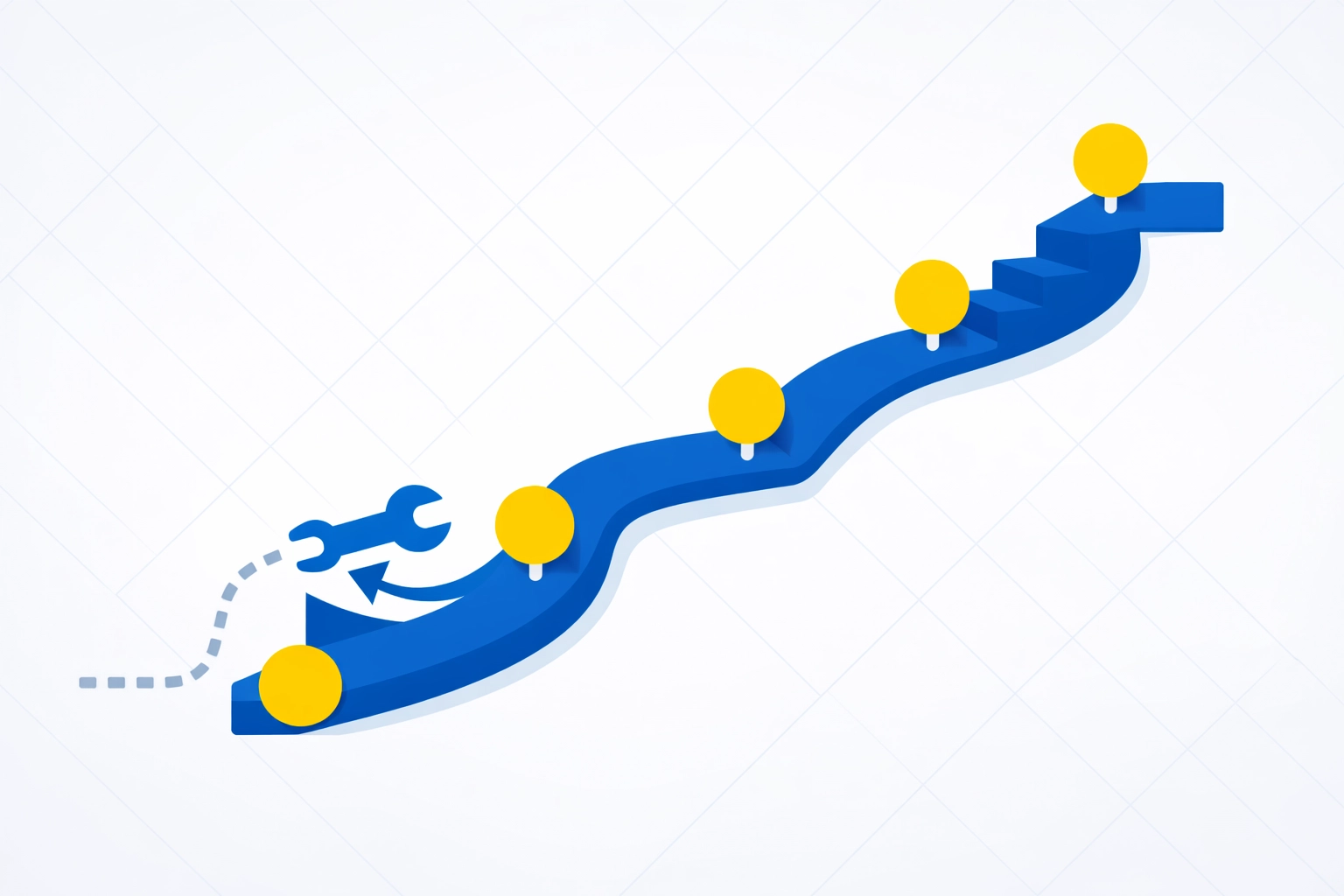
In the world of agile content marketing, content should serve a specific purpose in the revenue system. If you have a blog post that brings in 10,000 visitors a month but results in zero sales conversations, that content is a leak in your resources.
A Revenue Operator audits content based on its ability to move a prospect to the next stage of the funnel, not just its ability to rank on Google. We look for "content gaps" where prospects are looking for information to help them make a buying decision, but find nothing but top-of-funnel fluff.
Is Your Tech Stack Enabling or Inhibiting Growth?
The tools you use should be the plumbing of your revenue system. However, for many businesses, the tech stack is where the most expensive leaks occur.
When we perform campaign auditing, we often find companies paying for multiple tools that perform the same function, or worse, tools that don't communicate with each other. A "Franken-stack" of disconnected apps leads to manual data entry, human error, and lost opportunities.
As a Revenue Operator, VonClaro helps businesses consolidate their technology into a streamlined system. We ensure that your SEO tools, CRM, and email platforms are working in harmony. This consolidation doesn't just save money on software subscriptions; it prevents the loss of lead data that occurs when systems fail to "talk" to one another.
Identifying the "Hidden" Leaks: Customer Retention
Most funnel audits stop at the point of sale. This is a massive oversight. A true Revenue Operator knows that the most efficient way to grow revenue is to keep the customers you already have.
Leaks in the post-purchase phase include:
- High Churn Rates: Losing customers faster than you can acquire them.
- Lack of Upsell Opportunities: Failing to maximize the lifetime value of a customer.
- Poor Onboarding: Creating a negative first impression that prevents long-term loyalty.
By extending your audit to include the entire customer lifecycle, you transform your funnel into a flywheel. This is the essence of the VonClaro approach: building a system that doesn't just capture revenue once but generates it consistently over time.
How to Get Started with Your System Audit
While you can certainly find a website audit template free to check your headers and image alt-tags, a full-scale revenue audit requires a deeper level of expertise. If you are ready to stop guessing and start growing, follow these initial steps:
- Map Your Entire Revenue Process: From the first touchpoint to the final renewal.
- Define Your Key Metrics: Move beyond "vanity metrics" like likes and follows to "clarity metrics" like Sales Velocity and Customer Acquisition Cost (CAC).
- Interview Your Teams: Talk to Sales, Marketing, and Support to find out where they feel the most friction.
- Audit Your Attribution: Ensure you know exactly which dollars spent are resulting in dollars earned.
The Future of Growth is Revenue Operations
The days of the siloed digital marketing agency are coming to an end. In an increasingly competitive landscape, businesses can no longer afford to have "leaky" funnels managed by disconnected teams. The shift toward becoming a Revenue Operator is about taking responsibility for the entire system, not just a single channel.
At VonClaro, we specialize in building and maintaining these Single Revenue Systems. Whether you are looking for digital marketing in Victoria, BC or a comprehensive SEO and web design overhaul, our focus remains the same: identifying the leaks, optimizing the flow, and driving sustainable revenue growth.
Don't let your hard-earned traffic go to waste. It’s time to stop looking at your website as a digital brochure and start treating it as the core of a high-performance revenue engine.
Ready to see where your revenue is leaking? Contact us today to discuss a professional audit of your entire revenue system.


